
How do you evaluate whether someone is a good candidate for TMJ Botox?
First off, when I have a patient who comes to me and reports that they have clenching, grinding, headaches, or I see signs and symptoms present when we're doing our exam with them, such as a lot of tension in their jaw, pain in their jaw, feeling like their teeth aren't matching up together, sore teeth when they wake up in the morning, waking up with headaches, wear or cracked teeth, then we want to consider what kind of treatment options are good for treating that TMJ.
Now, there are a multitude of treatments that we go through and recommend, but this is just one of the services. Specifically for this, what I will do is an examination where I find out exactly what their problems are. I do a lot of palpation of the muscles in their face to see if they have any trigger points or soreness in the muscles targeted by this, and based on that, we determine whether they're a good candidate for it.
Which muscles do you target with TMJ Botox?
Specifically, when we are talking about TMJ Botox, we are targeting two of the major muscles that open and close the jaw and focus on clenching and grinding. That would be the masseter muscle and the temporalis muscle. The masseter muscle runs along your cheekbone, zygoma, and along the lower border of the mandible. It's a big, thick muscle that kind of goes down like this. In fact, I'm going to draw on my face so you can kind of see it goes along the jaw right here and down here. From there, I basically will have the patient bite down and squeeze so I can see and feel where that muscle engages.
I will actually draw on their face the borders of that muscle because there are a lot of important structures in the face that we don't want to target if we're not doing Botox for cosmetics. For example, there's a muscle right here called the DAO. What that does is it's responsible for pulling down the corners of your mouth when you're frowning. And if we hit that when we're targeting TMJ Botox, then the patient can get kind of a droopy smile, which we don't want to target in this specific instance.
What is the temporalis muscle and how do you treat it?
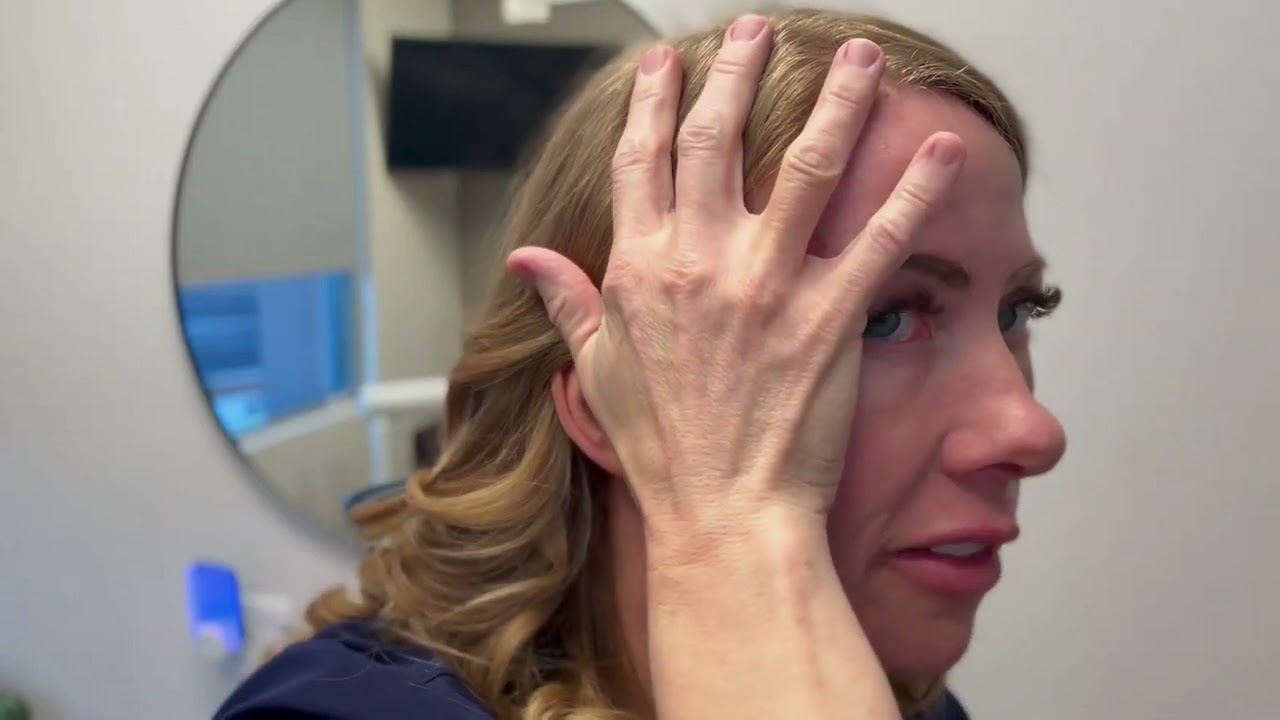
Then we also target the temporalis, which attaches to the zygoma, and it is a fan-shaped muscle that comes up along the side of the head there. Sometimes people will have tension spots in their hairline or get headaches in this area, and that is usually their temporalis firing when patients are clenching or grinding down on their teeth. We will target that as well. I will palpate and feel if, when people bite down, you can see that this muscle kind of bulges out right here. That's when we know that the temporalis is involved and that we want to target that. I will basically make marks. If temporalis is involved, we'll go in here, sometimes even up into their hairline, and we'll go there. I will target if you have a ball of muscle right here that's tender when you touch it from clenching or grinding. Sometimes it can be here in more of the belly, and sometimes it'll be up in the attachment closer to the ear. We kind of target all of those areas when we do TMJ Botox.
What should you expect during and after TMJ Botox?
What to expect when we do this is that you may get some mild bruising at the injection sites. When we're doing it, it's relatively not painful. Sometimes, if we hit a certain spot that's like a trigger point, you'll get almost like a little zing in that area, but sometimes you'll actually feel almost immediate relief because it has a dry needling effect when we go in and poke those muscles. If you've been to PT or chiro and they do dry needling technique, this works very similarly. The effects of the TMJ Botox and toxin are twofold. You'll get immediate relief from dry needling, and then you'll get that long-term effect once the toxin sets in.
How long does TMJ Botox last?
Patients want to know how long it lasts, and everybody is different. Typically, we see results anywhere from 3 to 8 months, depending on the severity of your clenching. What we expect, too, is that over time patients get longer and longer between their duration of treatment if it's being treated properly. There are other things that we may recommend in addition to TMJ toxin.
Does TMJ Botox change the way your face looks?
Patients want to know if it affects the way that their face looks. Definitely not in the same way that Botox for cosmetic reasons affects the way that your face looks. Some people report that they get a little bit of slimming in their jawline. Some people have a very prominent jaw, and they'll report that it slims that muscle right here just a little bit. That's probably the only appearance change that you get. You might get a little bit of smoothing of some wrinkles on the forehead in this area.
If we target the temporalis, there are relatively no negative side effects from it. Occasionally, people will report that they feel a little bit of a headache when it first starts to onset. And that's just those muscles starting to relax.
What aftercare do you recommend after TMJ Botox?
I usually recommend that patients drink a lot of water the day that we do treatment and that they do not exercise that day. They should not spend any time in the sun, and they also shouldn't do any extreme touching of the face. Light ring-finger pressure if they're washing their face or applying sunscreen or makeup, and just like I said, staying out of the sun, drinking a lot of water, and not doing a lot of touching of the face or working out. Those are some of the things to expect if you are interested in TMJ toxin for clenching and grinding.
How much does TMJ Botox cost and what is the next step?
Cost-wise, you're looking at anywhere from about $500 and up for TMJ Botox. It would be a good idea for you to come in, have us take a look, and see if we think you're a good candidate. We can tell you about how much toxin to expect for it to work. We do also have you come in for post-ops to check and make sure that it's working and helping you and to answer any of your questions.
How can I make an appointment at Gearin Aesthetic and General Dentistry?
If you’re ready to schedule an exam or would like to learn more about our services, we’d love to hear from you. Call us at (702) 710-8847 or email [email protected]. We look forward to hearing from you!.